
(Informationen)
Was ist Freifunk?
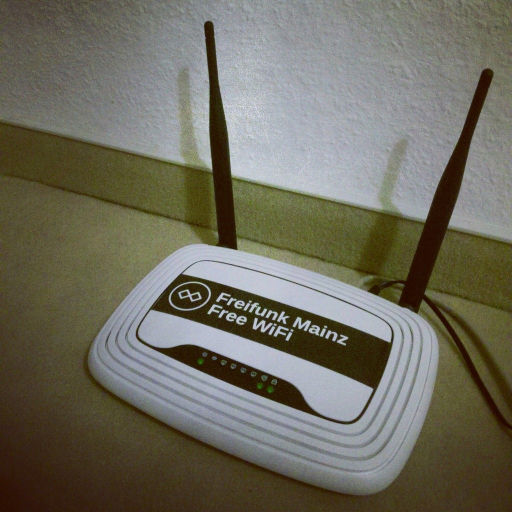
Freifunknetze sind freie, WLAN-basierte Funknetze, die nicht von kommerziellen Anbietern, sondern von Privatpersonen, Vereinen oder ähnlichen Organisationen angeboten werden. Dabei sind die Benutzer auch gleichzeitig die Betreiber der Computernetzwerke, die von einfachen Heimnetzwerken ausgehend, Häuser, Stadtteile, Dörfer oder ganze Städte vernetzen können.
Jeder Nutzer im Freifunk-Netz stellt seinen WLAN-Router für den Datentransfer der Allgemeinheit zur Verfügung. Das erweitert das Netz und eröffnet die Möglichkeit Daten, wie zum Beispiel Text, Musik und Filme über das Freifunk-Netz zu übertragen oder über von Teilnehmern eingerichtete Dienste im Netz zu chatten, zu telefonieren und gemeinsam Onlinegames zu spielen. Viele Teilnehmer stellen zudem ihren Internetzugang zur Verfügung und ermöglichen anderen den Zugang zum weltweiten Netz - gerade auch den sozial schwachen Gruppen, die sich keinen eigenen Anschluss leisten können.
»Das ist ein wenig so, wie wenndu dein eigenes Gemüse anbaust, es schmeckt einfach besser«
Aaron Kaplan, Funkfeuer Wien
Freifunk-Netze sind Selbstmach-Netze: Für den Aufbau nutzen Teilnehmer auf ihren WLAN-Routern spezielle Linuxdistributionen, z. B. die Freifunk-Firmware. Lokale Gruppen stellen die auf eigene Bedürfnisse angepasste Software dann auf ihren Websites zur Verfügung. In vielen Dörfern und Städten gibt es mittlerweile Freifunk-Gruppen und Zusammenkünfte, wo sich Interessierte treffen.

Fig.1 — Nodes vermeshen sich und erweitern das Netz
(Mitmachen)
Participate
Es gibt viele Möglichkeiten wie du dich in das Projekt einbringen kannst. Wir suchen hauptsächlich Leute in den folgenden Bereichen:
Wenn du unsere Mailingsliste abonnierst, bleibst du immer auf dem aktuellsten Stand. Dort kannst du auch gerne Fragen, wenn du Probleme hast oder eine neue Idee vorstellen willst.
Oder komme einfach zu einem Treffen vorbei und wir finden was spannendes für dich zu tun.
Ausführliche Informationen zu vielen verschiedenen Themen im Freifunk Mainz Universum gibt es in unserem Wiki
Antworten auf so ziemlich alle Fragen und Hilfe bei fast allen Problemen gibt es außerdem per Mail an kontakt@freifunk-mainz.de
(Termine)
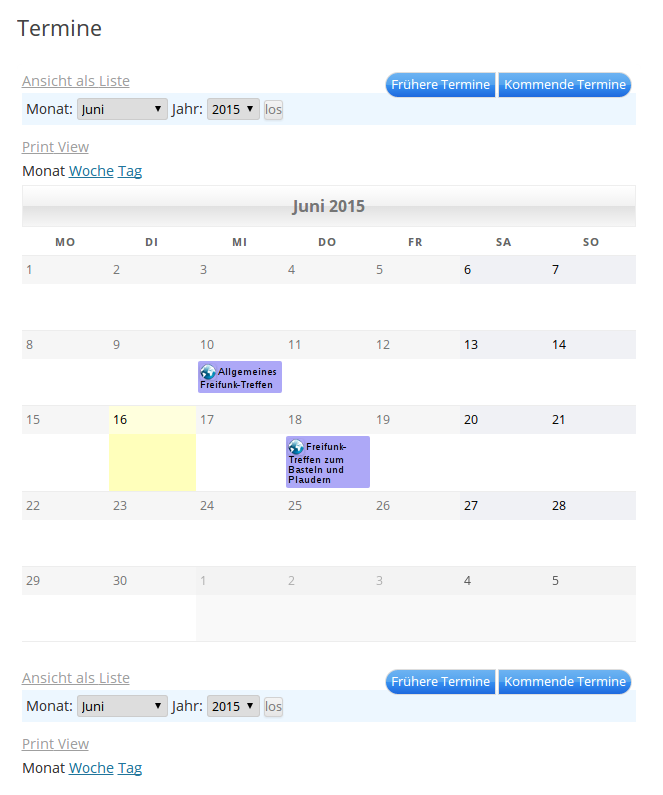
Nächstes Treffen
Wir treffen uns in der Regel monatlich - meistens am zweiten Mittwoch im Monat im Holzturm in Mainz.Genauere Informationen dazu werden in unserem Blog oder unserem Kalender angekündigt.
Interessierte sind jederzeit herzlich eingeladen. Wir freuen uns auf euer Kommen!
Bei Fragen schreib uns gerne eine Mail an kontakt@freifunk-mainz.de.
(Hotspotkarte)
Aktive Hotspots in Mainz
Hier kannst du alle derzeit aktiven Freifunk Knoten (Hotspots) sehen. Jeder gründe Punkt stellt einen solchen dar. Eine größere Version der Karte ist hier verfügbar.
Wenn du einen eigenen Freifunk Router betreiben willst und damit auch auf dieser Karte auftauchen willst (optional), kannst du dir die Anleitung zur Routerkonfiguration ansehen.
Bei Fragen oder Problemen schreib uns gerne eine Mail an kontakt@freifunk-mainz.de.
(Verein)
Der Freifunk Mainz e.V.
Um die Freifunk Community in Mainz, Wiesbaden und Umgebung zu unterstützen, wurde der Freifunk Mainz e.V. gegründet. Der Verein betreibt unter anderem einen Teil der Infrastruktur, sammelt Spenden und finanziert Werbematerialien und technische Gerätschaften für Freifunk. Weitere Informationen zum Verein sind im Wiki verfügbar.
Der Beitritt kann per Online-Formular geschehen, alternativ gibt es ein druckbares Formular. Der Mitgliedsbeitrag beträgt 12, 36 oder 72 € pro Jahr (frei wählbar) sowie für juristische Personen 100 € pro Jahr.
(Spenden)
Wir können Spenden für alle unsere Tätigkeiten gebrauchen, es gibt im Freifunk e.V. ausschließlich ehrenamtliche Mitarbeiter. Ihr könnt uns über folgende Wege spenden:
- Betterplace.org. (Dort wird das Ausstellen der Spendenbescheinigung für uns übernommen.)
- Banküberweisung (Kontoverbindung siehe unten)
- Paypal (vorstand@freifunk-mainz.de)
Wenn ihr für eure Spende eine Spendenquittung braucht, schickt uns bitte eine mail (vorstand@freifunk-mainz.de).
Bankverbindung
| Empfänger | Freifunk Mainz e.V. |
| IBAN | DE57 5519 0000 0872 8040 18 |
| BIC | MVBM DE 55 |
| Institut | Mainzer Volksbank |
(Impressum)
Verantwortlich
Freifunk Mainz e.V.Florian Altherr (1. Vorsitzender)
Rötherweg 1a
55126 Mainz
Kontakt
kontakt@freifunk-mainz.deGestaltung & Konzept
Daniel Weberruß (Bachelor-Thesis,Fachhochschule Mainz, SS 2013),
Betreut von Prof. Dr. Isabel Naegele
Programmierung
Daniel Weberruß (Mit Unterstützungvon Paul Schneider)
Schrift
Liberation Sans & Liberation Mono,Asscender Corporation,
Steve Matteson, SIL Open Font License.
Titelbild
Marconi Room, A. H. Poole Studio,The National Library of Ireland, P_WP_2539
Veröffentlicht in Flickr Commons unter Public Domain.
Förderer und Unterstützer

(Datenschutzerklärung)
Diese Datenschutzerklärung klärt Sie über die Art, den Umfang und Zweck der Verarbeitung von personenbezogenen Daten (nachfolgend kurz „Daten“) im Rahmen der Erbringung unserer Leistungen sowie innerhalb unseres Onlineangebotes und der mit ihm verbundenen Webseiten, Funktionen und Inhalte sowie externen Onlinepräsenzen, wie z.B. unser Social Media Profile auf (nachfolgend gemeinsam bezeichnet als „Onlineangebot“). Im Hinblick auf die verwendeten Begrifflichkeiten, wie z.B. „Verarbeitung“ oder „Verantwortlicher“ verweisen wir auf die Definitionen im Art. 4 der Datenschutzgrundverordnung (DSGVO).
Verantwortlicher
Freifunk Mainz e.V.
Florian Altherr (1. Vorsitzender)
Rötherweg 1a
55126 Mainz
kontakt@freifunk-mainz.de
Arten der verarbeiteten Daten
- Bestandsdaten (z.B., Personen-Stammdaten, Namen oder Adressen).
- Kontaktdaten (z.B., E-Mail, Telefonnummern).
- Inhaltsdaten (z.B., Texteingaben, Fotografien, Videos).
- Nutzungsdaten (z.B., besuchte Webseiten, Interesse an Inhalten, Zugriffszeiten).
- Meta-/Kommunikationsdaten (z.B., Geräte-Informationen, IP-Adressen).
Kategorien betroffener Personen
Besucher und Nutzer des Onlineangebotes (Nachfolgend bezeichnen wir die betroffenen Personen zusammenfassend auch als „Nutzer“).
Zweck der Verarbeitung
- Zurverfügungstellung des Onlineangebotes, seiner Funktionen und Inhalte.
- Beantwortung von Kontaktanfragen und Kommunikation mit Nutzern.
- Sicherheitsmaßnahmen.
- Reichweitenmessung/Marketing
Verwendete Begrifflichkeiten
„Personenbezogene Daten“ sind alle Informationen, die sich auf eine identifizierte oder identifizierbare natürliche Person (im Folgenden „betroffene Person“) beziehen; als identifizierbar wird eine natürliche Person angesehen, die direkt oder indirekt, insbesondere mittels Zuordnung zu einer Kennung wie einem Namen, zu einer Kennnummer, zu Standortdaten, zu einer Online-Kennung (z.B. Cookie) oder zu einem oder mehreren besonderen Merkmalen identifiziert werden kann, die Ausdruck der physischen, physiologischen, genetischen, psychischen, wirtschaftlichen, kulturellen oder sozialen Identität dieser natürlichen Person sind.
„Verarbeitung“ ist jeder mit oder ohne Hilfe automatisierter Verfahren ausgeführte Vorgang oder jede solche Vorgangsreihe im Zusammenhang mit personenbezogenen Daten. Der Begriff reicht weit und umfasst praktisch jeden Umgang mit Daten.
„Pseudonymisierung“ die Verarbeitung personenbezogener Daten in einer Weise, dass die personenbezogenen Daten ohne Hinzuziehung zusätzlicher Informationen nicht mehr einer spezifischen betroffenen Person zugeordnet werden können, sofern diese zusätzlichen Informationen gesondert aufbewahrt werden und technischen und organisatorischen Maßnahmen unterliegen, die gewährleisten, dass die personenbezogenen Daten nicht einer identifizierten oder identifizierbaren natürlichen Person zugewiesen werden.
„Profiling“ jede Art der automatisierten Verarbeitung personenbezogener Daten, die darin besteht, dass diese personenbezogenen Daten verwendet werden, um bestimmte persönliche Aspekte, die sich auf eine natürliche Person beziehen, zu bewerten, insbesondere um Aspekte bezüglich Arbeitsleistung, wirtschaftliche Lage, Gesundheit, persönliche Vorlieben, Interessen, Zuverlässigkeit, Verhalten, Aufenthaltsort oder Ortswechsel dieser natürlichen Person zu analysieren oder vorherzusagen.
Als „Verantwortlicher“ wird die natürliche oder juristische Person, Behörde, Einrichtung oder andere Stelle, die allein oder gemeinsam mit anderen über die Zwecke und Mittel der Verarbeitung von personenbezogenen Daten entscheidet, bezeichnet.
„Auftragsverarbeiter“ eine natürliche oder juristische Person, Behörde, Einrichtung oder andere Stelle, die personenbezogene Daten im Auftrag des Verantwortlichen verarbeitet.
Maßgebliche Rechtsgrundlagen
Nach Maßgabe des Art. 13 DSGVO teilen wir Ihnen die Rechtsgrundlagen unserer Datenverarbeitungen mit. Für Nutzer aus dem Geltungsbereich der Datenschutzgrundverordnung (DSGVO), d.h. der EU und des EWG gilt, sofern die Rechtsgrundlage in der Datenschutzerklärung nicht genannt wird, Folgendes:
Die Rechtsgrundlage für die Einholung von Einwilligungen ist Art. 6 Abs. 1 lit. a und Art. 7 DSGVO;
Die Rechtsgrundlage für die Verarbeitung zur Erfüllung unserer Leistungen und Durchführung vertraglicher Maßnahmen sowie Beantwortung von Anfragen ist Art. 6 Abs. 1 lit. b DSGVO;
Die Rechtsgrundlage für die Verarbeitung zur Erfüllung unserer rechtlichen Verpflichtungen ist Art. 6 Abs. 1 lit. c DSGVO;
Für den Fall, dass lebenswichtige Interessen der betroffenen Person oder einer anderen natürlichen Person eine Verarbeitung personenbezogener Daten erforderlich machen, dient Art. 6 Abs. 1 lit. d DSGVO als Rechtsgrundlage.
Die Rechtsgrundlage für die erforderliche Verarbeitung zur Wahrnehmung einer Aufgabe, die im öffentlichen Interesse liegt oder in Ausübung öffentlicher Gewalt erfolgt, die dem Verantwortlichen übertragen wurde ist Art. 6 Abs. 1 lit. e DSGVO.
Die Rechtsgrundlage für die Verarbeitung zur Wahrung unserer berechtigten Interessen ist Art. 6 Abs. 1 lit. f DSGVO.
Die Verarbeitung von Daten zu anderen Zwecken als denen, zu denen sie erhoben wurden, bestimmt sich nach den Vorgaben des Art 6 Abs. 4 DSGVO.
Die Verarbeitung von besonderen Kategorien von Daten (entsprechend Art. 9 Abs. 1 DSGVO) bestimmt sich nach den Vorgaben des Art. 9 Abs. 2 DSGVO.
Sicherheitsmaßnahmen
Wir treffen nach Maßgabe der gesetzlichen Vorgabenunter Berücksichtigung des Stands der Technik, der Implementierungskosten und der Art, des Umfangs, der Umstände und der Zwecke der Verarbeitung sowie der unterschiedlichen Eintrittswahrscheinlichkeit und Schwere des Risikos für die Rechte und Freiheiten natürlicher Personen, geeignete technische und organisatorische Maßnahmen, um ein dem Risiko angemessenes Schutzniveau zu gewährleisten.
Zu den Maßnahmen gehören insbesondere die Sicherung der Vertraulichkeit, Integrität und Verfügbarkeit von Daten durch Kontrolle des physischen Zugangs zu den Daten, als auch des sie betreffenden Zugriffs, der Eingabe, Weitergabe, der Sicherung der Verfügbarkeit und ihrer Trennung. Des Weiteren haben wir Verfahren eingerichtet, die eine Wahrnehmung von Betroffenenrechten, Löschung von Daten und Reaktion auf Gefährdung der Daten gewährleisten. Ferner berücksichtigen wir den Schutz personenbezogener Daten bereits bei der Entwicklung, bzw. Auswahl von Hardware, Software sowie Verfahren, entsprechend dem Prinzip des Datenschutzes durch Technikgestaltung und durch datenschutzfreundliche Voreinstellungen.
Zusammenarbeit mit Auftragsverarbeitern, gemeinsam Verantwortlichen und Dritten
Sofern wir im Rahmen unserer Verarbeitung Daten gegenüber anderen Personen und Unternehmen (Auftragsverarbeitern, gemeinsam Verantwortlichen oder Dritten) offenbaren, sie an diese übermitteln oder ihnen sonst Zugriff auf die Daten gewähren, erfolgt dies nur auf Grundlage einer gesetzlichen Erlaubnis (z.B. wenn eine Übermittlung der Daten an Dritte, wie an Zahlungsdienstleister, zur Vertragserfüllung erforderlich ist), Nutzer eingewilligt haben, eine rechtliche Verpflichtung dies vorsieht oder auf Grundlage unserer berechtigten Interessen (z.B. beim Einsatz von Beauftragten, Webhostern, etc.).
Sofern wir Daten anderen Unternehmen unserer Unternehmensgruppe offenbaren, übermitteln oder ihnen sonst den Zugriff gewähren, erfolgt dies insbesondere zu administrativen Zwecken als berechtigtes Interesse und darüberhinausgehend auf einer den gesetzlichen Vorgaben entsprechenden Grundlage.
Übermittlungen in Drittländer
Sofern wir Daten in einem Drittland (d.h. außerhalb der Europäischen Union (EU), des Europäischen Wirtschaftsraums (EWR) oder der Schweizer Eidgenossenschaft) verarbeiten oder dies im Rahmen der Inanspruchnahme von Diensten Dritter oder Offenlegung, bzw. Übermittlung von Daten an andere Personen oder Unternehmen geschieht, erfolgt dies nur, wenn es zur Erfüllung unserer (vor)vertraglichen Pflichten, auf Grundlage Ihrer Einwilligung, aufgrund einer rechtlichen Verpflichtung oder auf Grundlage unserer berechtigten Interessen geschieht. Vorbehaltlich ausdrücklicher Einwilligung oder vertraglich erforderlicher Übermittlung, verarbeiten oder lassen wir die Daten nur in Drittländern mit einem anerkannten Datenschutzniveau, zu denen die unter dem "Privacy-Shield" zertifizierten US-Verarbeiter gehören oder auf Grundlage besonderer Garantien, wie z.B. vertraglicher Verpflichtung durch sogenannte Standardschutzklauseln der EU-Kommission, dem Vorliegen von Zertifizierungen oder verbindlichen internen Datenschutzvorschriften verarbeiten (Art. 44 bis 49 DSGVO, Informationsseite der EU-Kommission).
Rechte der betroffenen Personen
Sie haben das Recht, eine Bestätigung darüber zu verlangen, ob betreffende Daten verarbeitet werden und auf Auskunft über diese Daten sowie auf weitere Informationen und Kopie der Daten entsprechend den gesetzlichen Vorgaben.
Sie haben entsprechend. den gesetzlichen Vorgaben das Recht, die Vervollständigung der Sie betreffenden Daten oder die Berichtigung der Sie betreffenden unrichtigen Daten zu verlangen.
Sie haben nach Maßgabe der gesetzlichen Vorgaben das Recht zu verlangen, dass betreffende Daten unverzüglich gelöscht werden, bzw. alternativ nach Maßgabe der gesetzlichen Vorgaben eine Einschränkung der Verarbeitung der Daten zu verlangen.
Sie haben das Recht zu verlangen, dass die Sie betreffenden Daten, die Sie uns bereitgestellt haben nach Maßgabe der gesetzlichen Vorgaben zu erhalten und deren Übermittlung an andere Verantwortliche zu fordern.
Sie haben ferner nach Maßgabe der gesetzlichen Vorgaben das Recht, eine Beschwerde bei der zuständigen Aufsichtsbehörde einzureichen.
Widerrufsrecht
Sie haben das Recht, erteilte Einwilligungen mit Wirkung für die Zukunft zu widerrufen.
Widerspruchsrecht
Sie können der künftigen Verarbeitung der Sie betreffenden Daten nach Maßgabe der gesetzlichen Vorgaben jederzeit widersprechen. Der Widerspruch kann insbesondere gegen die Verarbeitung für Zwecke der Direktwerbung erfolgen.
Cookies und Widerspruchsrecht bei Direktwerbung
Als „Cookies“ werden kleine Dateien bezeichnet, die auf Rechnern der Nutzer gespeichert werden. Innerhalb der Cookies können unterschiedliche Angaben gespeichert werden. Ein Cookie dient primär dazu, die Angaben zu einem Nutzer (bzw. dem Gerät auf dem das Cookie gespeichert ist) während oder auch nach seinem Besuch innerhalb eines Onlineangebotes zu speichern. Als temporäre Cookies, bzw. „Session-Cookies“ oder „transiente Cookies“, werden Cookies bezeichnet, die gelöscht werden, nachdem ein Nutzer ein Onlineangebot verlässt und seinen Browser schließt. In einem solchen Cookie kann z.B. der Inhalt eines Warenkorbs in einem Onlineshop oder ein Login-Status gespeichert werden. Als „permanent“ oder „persistent“ werden Cookies bezeichnet, die auch nach dem Schließen des Browsers gespeichert bleiben. So kann z.B. der Login-Status gespeichert werden, wenn die Nutzer diese nach mehreren Tagen aufsuchen. Ebenso können in einem solchen Cookie die Interessen der Nutzer gespeichert werden, die für Reichweitenmessung oder Marketingzwecke verwendet werden. Als „Third-Party-Cookie“ werden Cookies bezeichnet, die von anderen Anbietern als dem Verantwortlichen, der das Onlineangebot betreibt, angeboten werden (andernfalls, wenn es nur dessen Cookies sind spricht man von „First-Party Cookies“).
Wir können temporäre und permanente Cookies einsetzen und klären hierüber im Rahmen unserer Datenschutzerklärung auf.
Falls die Nutzer nicht möchten, dass Cookies auf ihrem Rechner gespeichert werden, werden sie gebeten die entsprechende Option in den Systemeinstellungen ihres Browsers zu deaktivieren. Gespeicherte Cookies können in den Systemeinstellungen des Browsers gelöscht werden. Der Ausschluss von Cookies kann zu Funktionseinschränkungen dieses Onlineangebotes führen.
Ein genereller Widerspruch gegen den Einsatz der zu Zwecken des Onlinemarketing eingesetzten Cookies kann bei einer Vielzahl der Dienste, vor allem im Fall des Trackings, über die US-amerikanische Seite http://www.aboutads.info/choices/ oder die EU-Seite http://www.youronlinechoices.com/ erklärt werden. Des Weiteren kann die Speicherung von Cookies mittels deren Abschaltung in den Einstellungen des Browsers erreicht werden. Bitte beachten Sie, dass dann gegebenenfalls nicht alle Funktionen dieses Onlineangebotes genutzt werden können.
Löschung von Daten
Die von uns verarbeiteten Daten werden nach Maßgabe der gesetzlichen Vorgaben gelöscht oder in ihrer Verarbeitung eingeschränkt. Sofern nicht im Rahmen dieser Datenschutzerklärung ausdrücklich angegeben, werden die bei uns gespeicherten Daten gelöscht, sobald sie für ihre Zweckbestimmung nicht mehr erforderlich sind und der Löschung keine gesetzlichen Aufbewahrungspflichten entgegenstehen.
Sofern die Daten nicht gelöscht werden, weil sie für andere und gesetzlich zulässige Zwecke erforderlich sind, wird deren Verarbeitung eingeschränkt. D.h. die Daten werden gesperrt und nicht für andere Zwecke verarbeitet. Das gilt z.B. für Daten, die aus handels- oder steuerrechtlichen Gründen aufbewahrt werden müssen.
Änderungen und Aktualisierungen der Datenschutzerklärung
Wir bitten Sie sich regelmäßig über den Inhalt unserer Datenschutzerklärung zu informieren. Wir passen die Datenschutzerklärung an, sobald die Änderungen der von uns durchgeführten Datenverarbeitungen dies erforderlich machen. Wir informieren Sie, sobald durch die Änderungen eine Mitwirkungshandlung Ihrerseits (z.B. Einwilligung) oder eine sonstige individuelle Benachrichtigung erforderlich wird.
Erbringung unserer satzungs- und geschäftsgemäßen Leistungen
Wir verarbeiten die Daten unserer Mitglieder, Unterstützer, Interessenten, Kunden oder sonstiger Personen entsprechend Art. 6 Abs. 1 lit. b. DSGVO, sofern wir ihnen gegenüber vertragliche Leistungen anbieten oder im Rahmen bestehender geschäftlicher Beziehung, z.B. gegenüber Mitgliedern, tätig werden oder selbst Empfänger von Leistungen und Zuwendungen sind. Im Übrigen verarbeiten wir die Daten betroffener Personen gem. Art. 6 Abs. 1 lit. f. DSGVO auf Grundlage unserer berechtigten Interessen, z.B. wenn es sich um administrative Aufgaben oder Öffentlichkeitsarbeit handelt.
Die hierbei verarbeiteten Daten, die Art, der Umfang und der Zweck und die Erforderlichkeit ihrer Verarbeitung bestimmen sich nach dem zugrundeliegenden Vertragsverhältnis. Dazu gehören grundsätzlich Bestands- und Stammdaten der Personen (z.B., Name, Adresse, etc.), als auch die Kontaktdaten (z.B., E-Mailadresse, Telefon, etc.), die Vertragsdaten (z.B., in Anspruch genommene Leistungen, mitgeteilte Inhalte und Informationen, Namen von Kontaktpersonen) und sofern wir zahlungspflichtige Leistungen oder Produkte anbieten, Zahlungsdaten (z.B., Bankverbindung, Zahlungshistorie, etc.).
Wir löschen Daten, die zur Erbringung unserer satzungs- und geschäftsmäßigen Zwecke nicht mehr erforderlich sind. Dies bestimmt sich entsprechend der jeweiligen Aufgaben und vertraglichen Beziehungen. Im Fall geschäftlicher Verarbeitung bewahren wir die Daten so lange auf, wie sie zur Geschäftsabwicklung, als auch im Hinblick auf etwaige Gewährleistungs- oder Haftungspflichten relevant sein können. Die Erforderlichkeit der Aufbewahrung der Daten wird alle drei Jahre überprüft; im Übrigen gelten die gesetzlichen Aufbewahrungspflichten.
Kommentare und Beiträge
Wenn Nutzer Kommentare oder sonstige Beiträge hinterlassen, können ihre IP-Adressen auf Grundlage unserer berechtigten Interessen im Sinne des Art. 6 Abs. 1 lit. f. DSGVO für 7 Tage gespeichert werden. Das erfolgt zu unserer Sicherheit, falls jemand in Kommentaren und Beiträgen widerrechtliche Inhalte hinterlässt (Beleidigungen, verbotene politische Propaganda, etc.). In diesem Fall können wir selbst für den Kommentar oder Beitrag belangt werden und sind daher an der Identität des Verfassers interessiert.
Des Weiteren behalten wir uns vor, auf Grundlage unserer berechtigten Interessen gem. Art. 6 Abs. 1 lit. f. DSGVO, die Angaben der Nutzer zwecks Spamerkennung zu verarbeiten.
Auf derselben Rechtsgrundlage behalten wir uns vor, im Fall von Umfragen die IP-Adressen der Nutzer für deren Dauer zu speichern und Cookies zu verwenden, um Mehrfachabstimmungen zu vermeiden.
Die im Rahmen der Kommentare und Beiträge mitgeteilte Informationen zur Person, etwaige Kontakt- sowie Websiteinformationen als auch die inhaltlichen Angaben, werden von uns bis zum Widerspruch der Nutzer dauerhaft gespeichert.
Kommentarabonnements
Die Nachfolgekommentare können durch Nutzer mit deren Einwilligung gem. Art. 6 Abs. 1 lit. a DSGVO abonniert werden. Die Nutzer erhalten eine Bestätigungsemail, um zu überprüfen, ob sie der Inhaber der eingegebenen Emailadresse sind. Nutzer können laufende Kommentarabonnements jederzeit abbestellen. Die Bestätigungsemail wird Hinweise zu den Widerrufsmöglichkeiten enthalten. Für die Zwecke des Nachweises der Einwilligung der Nutzer, speichern wir den Anmeldezeitpunkt nebst der IP-Adresse der Nutzer und löschen diese Informationen, wenn Nutzer sich von dem Abonnement abmelden.
Sie können den Empfang unseres Abonnements jederzeit kündigen, d.h. Ihre Einwilligungen widerrufen. Wir können die ausgetragenen E-Mailadressen bis zu drei Jahren auf Grundlage unserer berechtigten Interessen speichern bevor wir sie löschen, um eine ehemals gegebene Einwilligung nachweisen zu können. Die Verarbeitung dieser Daten wird auf den Zweck einer möglichen Abwehr von Ansprüchen beschränkt. Ein individueller Löschungsantrag ist jederzeit möglich, sofern zugleich das ehemalige Bestehen einer Einwilligung bestätigt wird.
Onlinepräsenzen in sozialen Medien
Wir unterhalten Onlinepräsenzen innerhalb sozialer Netzwerke und Plattformen, um mit den dort aktiven Kunden, Interessenten und Nutzern kommunizieren und sie dort über unsere Leistungen informieren zu können.
Wir weisen darauf hin, dass dabei Daten der Nutzer außerhalb des Raumes der Europäischen Union verarbeitet werden können. Hierdurch können sich für die Nutzer Risiken ergeben, weil so z.B. die Durchsetzung der Rechte der Nutzer erschwert werden könnte. Im Hinblick auf US-Anbieter die unter dem Privacy-Shield zertifiziert sind, weisen wir darauf hin, dass sie sich damit verpflichten, die Datenschutzstandards der EU einzuhalten.
Ferner werden die Daten der Nutzer im Regelfall für Marktforschungs- und Werbezwecke verarbeitet. So können z.B. aus dem Nutzungsverhalten und sich daraus ergebenden Interessen der Nutzer Nutzungsprofile erstellt werden. Die Nutzungsprofile können wiederum verwendet werden, um z.B. Werbeanzeigen innerhalb und außerhalb der Plattformen zu schalten, die mutmaßlich den Interessen der Nutzer entsprechen. Zu diesen Zwecken werden im Regelfall Cookies auf den Rechnern der Nutzer gespeichert, in denen das Nutzungsverhalten und die Interessen der Nutzer gespeichert werden. Ferner können in den Nutzungsprofilen auch Daten unabhängig der von den Nutzern verwendeten Geräte gespeichert werden (insbesondere wenn die Nutzer Mitglieder der jeweiligen Plattformen sind und bei diesen eingeloggt sind).
Die Verarbeitung der personenbezogenen Daten der Nutzer erfolgt auf Grundlage unserer berechtigten Interessen an einer effektiven Information der Nutzer und Kommunikation mit den Nutzern gem. Art. 6 Abs. 1 lit. f. DSGVO. Falls die Nutzer von den jeweiligen Anbietern der Plattformen um eine Einwilligung in die vorbeschriebene Datenverarbeitung gebeten werden, ist die Rechtsgrundlage der Verarbeitung Art. 6 Abs. 1 lit. a., Art. 7 DSGVO.
Für eine detaillierte Darstellung der jeweiligen Verarbeitungen und der Widerspruchsmöglichkeiten (Opt-Out), verweisen wir auf die nachfolgend verlinkten Angaben der Anbieter.
Auch im Fall von Auskunftsanfragen und der Geltendmachung von Nutzerrechten, weisen wir darauf hin, dass diese am effektivsten bei den Anbietern geltend gemacht werden können. Nur die Anbieter haben jeweils Zugriff auf die Daten der Nutzer und können direkt entsprechende Maßnahmen ergreifen und Auskünfte geben. Sollten Sie dennoch Hilfe benötigen, dann können Sie sich an uns wenden.
- Facebook, -Seiten, -Gruppen, (Facebook Ireland Ltd., 4 Grand Canal Square, Grand Canal Harbour, Dublin 2, Irland) auf Grundlage einer Vereinbarung über gemeinsame Verarbeitung personenbezogener Daten - Datenschutzerklärung: https://www.facebook.com/about/privacy/, speziell für Seiten: https://www.facebook.com/legal/terms/information_about_page_insights_data , Opt-Out: https://www.facebook.com/settings?tab=ads und http://www.youronlinechoices.com, Privacy Shield: https://www.privacyshield.gov/participant?id=a2zt0000000GnywAAC&status=Active.
- Google/ YouTube (Google Ireland Limited, Gordon House, Barrow Street, Dublin 4, Irland) – Datenschutzerklärung: https://policies.google.com/privacy, Opt-Out: https://adssettings.google.com/authenticated, Privacy Shield: https://www.privacyshield.gov/participant?id=a2zt000000001L5AAI&status=Active.
- Instagram (Instagram Inc., 1601 Willow Road, Menlo Park, CA, 94025, USA) – Datenschutzerklärung/ Opt-Out: http://instagram.com/about/legal/privacy/.
- Twitter (Twitter Inc., 1355 Market Street, Suite 900, San Francisco, CA 94103, USA) - Datenschutzerklärung: https://twitter.com/de/privacy, Opt-Out: https://twitter.com/personalization, Privacy Shield: https://www.privacyshield.gov/participant?id=a2zt0000000TORzAAO&status=Active.
- Pinterest (Pinterest Inc., 635 High Street, Palo Alto, CA, 94301, USA) – Datenschutzerklärung/ Opt-Out: https://about.pinterest.com/de/privacy-policy.
- LinkedIn (LinkedIn Ireland Unlimited Company Wilton Place, Dublin 2, Irland) - Datenschutzerklärung https://www.linkedin.com/legal/privacy-policy , Opt-Out: https://www.linkedin.com/psettings/guest-controls/retargeting-opt-out, Privacy Shield: https://www.privacyshield.gov/participant?id=a2zt0000000L0UZAA0&status=Active.
- Xing (XING AG, Dammtorstraße 29-32, 20354 Hamburg, Deutschland) - Datenschutzerklärung/ Opt-Out: https://privacy.xing.com/de/datenschutzerklaerung.
- Wakalet (Wakelet Limited, 76 Quay Street, Manchester, M3 4PR, United Kingdom) - Datenschutzerklärung/ Opt-Out: https://wakelet.com/privacy.html.
- Soundcloud (SoundCloud Limited, Rheinsberger Str. 76/77, 10115 Berlin, Deutschland) - Datenschutzerklärung/ Opt-Out: https://soundcloud.com/pages/privacy.
Einbindung von Diensten und Inhalten Dritter
Wir setzen innerhalb unseres Onlineangebotes auf Grundlage unserer berechtigten Interessen (d.h. Interesse an der Analyse, Optimierung und wirtschaftlichem Betrieb unseres Onlineangebotes im Sinne des Art. 6 Abs. 1 lit. f. DSGVO) Inhalts- oder Serviceangebote von Drittanbietern ein, um deren Inhalte und Services, wie z.B. Videos oder Schriftarten einzubinden (nachfolgend einheitlich bezeichnet als “Inhalte”).
Dies setzt immer voraus, dass die Drittanbieter dieser Inhalte, die IP-Adresse der Nutzer wahrnehmen, da sie ohne die IP-Adresse die Inhalte nicht an deren Browser senden könnten. Die IP-Adresse ist damit für die Darstellung dieser Inhalte erforderlich. Wir bemühen uns nur solche Inhalte zu verwenden, deren jeweilige Anbieter die IP-Adresse lediglich zur Auslieferung der Inhalte verwenden. Drittanbieter können ferner so genannte Pixel-Tags (unsichtbare Grafiken, auch als "Web Beacons" bezeichnet) für statistische oder Marketingzwecke verwenden. Durch die "Pixel-Tags" können Informationen, wie der Besucherverkehr auf den Seiten dieser Website ausgewertet werden. Die pseudonymen Informationen können ferner in Cookies auf dem Gerät der Nutzer gespeichert werden und unter anderem technische Informationen zum Browser und Betriebssystem, verweisende Webseiten, Besuchszeit sowie weitere Angaben zur Nutzung unseres Onlineangebotes enthalten, als auch mit solchen Informationen aus anderen Quellen verbunden werden.
Google Fonts
Wir binden die Schriftarten ("Google Fonts") des Anbieters Google Ireland Limited, Gordon House, Barrow Street, Dublin 4, Irland, ein. Nach Angaben von Google werden die Daten der Nutzer allein zu Zwecken der Darstellung der Schriftarten im Browser der Nutzer verwendet. Die Einbindung erfolgt auf Grundlage unserer berechtigten Interessen an einer technisch sicheren, wartungsfreien und effizienten Nutzung von Schriftarten, deren einheitlicher Darstellung sowie Berücksichtigung möglicher lizenzrechtlicher Restriktionen für deren Einbindung. Datenschutzerklärung: https://www.google.com/policies/privacy/.
OpenStreetMap
Wir binden die Landkarten des Dienstes "OpenStreetMap" ein (https://www.openstreetmap.de), die auf Grundlage der Open Data Commons Open Database Lizenz (ODbL) durch die OpenStreetMap Foundation (OSMF) angeboten werden. Datenschutzerklärung: https://wiki.openstreetmap.org/wiki/Privacy_Policy.
Nach unserer Kenntnis werden die Daten der Nutzer durch OpenStreetMap ausschließlich zu Zwecken der Darstellung der Kartenfunktionen und Zwischenspeicherung der gewählten Einstellungen verwendet. Zu diesen Daten können insbesondere IP-Adressen und Standortdaten der Nutzer gehören, die jedoch nicht ohne deren Einwilligung (im Regelfall im Rahmen der Einstellungen ihrer Mobilgeräte vollzogen), erhoben werden.
Die Daten können in den USA verarbeitet werden. Weitere Informationen können Sie der Datenschutzerklärung von OpenStreetMap entnehmen: https://wiki.openstreetmap.org/wiki/Privacy_Policy.